Animals That Look Like Hamsters: Cute Hamster-Like Animals
Animals that look like hamsters can be surprisingly easy to confuse with actual hamsters because many small mammals share similar round bodies, short legs, tiny ears, whiskers, and furry coats. These animals can belong to completely different species and families.
Some are close relatives of hamsters, while others only look similar because they have adapted to comparable environments. In this article, we will explore animals that look like hamsters, their unique characteristics, habitats, diets, and the main differences that help identify them.
What Makes An Animal Look Like A Hamster?
Hamsters have several recognizable features that make them look especially cute and distinctive. They usually have compact bodies, short tails, rounded ears, small eyes, and soft fur. Their cheek pouches are another famous feature, allowing them to carry food.
Many other small mammals share some of these characteristics, which is why they can look like hamsters at first glance. Body shape, fur color, facial structure, and movement can all create a hamster-like appearance even when an animal is not closely related to hamsters.
Animals That Look Like Hamsters
- Gerbils
- Guinea Pigs
- Voles
- Mice
- Rats
- Dwarf Hamsters
- Dormice
- Jerboas
- Degus
- Chipmunks
- Pikas
- Muskrats
- Ground Squirrels
- Prairie Dogs
- Chinchillas
Gerbils
Gerbils are among the animals that look like hamsters, especially because they are small, furry rodents commonly kept as pets. They have rounded heads, large eyes, small ears, and soft coats. However, gerbils usually have longer tails and slimmer bodies than hamsters.
Their hind legs are also relatively long, allowing them to jump and move quickly. Gerbils naturally live in dry environments and are excellent diggers. Unlike many hamsters, they are often social animals and may enjoy living with another compatible gerbil. Their active and curious behavior makes them popular small pets.
Guinea Pigs
Guinea pigs are another animal that people sometimes mistake for large hamsters because of their furry bodies and rounded faces. They are considerably larger than most hamsters and have no visible tail. Guinea pigs are herbivores that mainly eat hay, grasses, vegetables, and specially formulated food.
They have short legs and sturdy bodies, giving them a somewhat hamster-like appearance when viewed from certain angles. Their ears are usually small, and their eyes are positioned on the sides of their heads. Unlike hamsters, guinea pigs are highly social and generally thrive when kept with other guinea pigs.
Voles
Voles are small rodents that can look remarkably similar to hamsters. They have compact bodies, short tails, tiny ears, and rounded faces. Their thick fur often makes them appear even rounder than they actually are. Voles are found across many parts of the Northern Hemisphere and commonly live in grasslands, forests, meadows, and agricultural areas.
They primarily feed on vegetation, roots, seeds, and other plant material. Although their appearance resembles hamsters, voles have different lifestyles and behaviors. Their small ears and short tails are useful clues when trying to distinguish them from hamsters.
Mice
Mice are familiar small rodents that can sometimes resemble hamsters, particularly certain varieties with rounded bodies and thick fur. However, most mice have noticeably larger ears, slimmer bodies, and longer tails. They are highly adaptable animals and can live in forests, fields, grasslands, and human environments.
Mice are generally omnivorous and eat seeds, grains, fruits, insects, and other available foods. Some mice are kept as pets, while others live as wild animals. Their quick movements and slender shape usually help distinguish them from the more compact appearance of a hamster.
Rats
Rats can look like oversized hamsters when they have thick bodies and short fur. Young rats, in particular, may be mistaken for other small rodents because their features are not fully developed. Rats usually have longer tails, larger ears, and more elongated bodies than hamsters.
They are intelligent and highly adaptable animals that can live in a wide range of habitats. Rats are omnivores and can consume grains, fruits, vegetables, insects, and other foods. Some species are also popular pets because they are social, intelligent, and capable of learning tricks and responding to their owners.
Dormice
Dormice are small rodents with rounded bodies and soft fur, making them another example of animals that look like hamsters. They are generally characterized by large eyes, small rounded ears, and relatively short faces. Some dormice have bushy tails, which clearly separates them from most hamsters.
Dormice are found in Europe, Asia, and parts of Africa, depending on the species. Many are excellent climbers and spend significant amounts of time in trees or shrubs. They commonly eat fruits, seeds, nuts, flowers, and insects. Their large eyes help them navigate during their often nocturnal lifestyle.
Degus
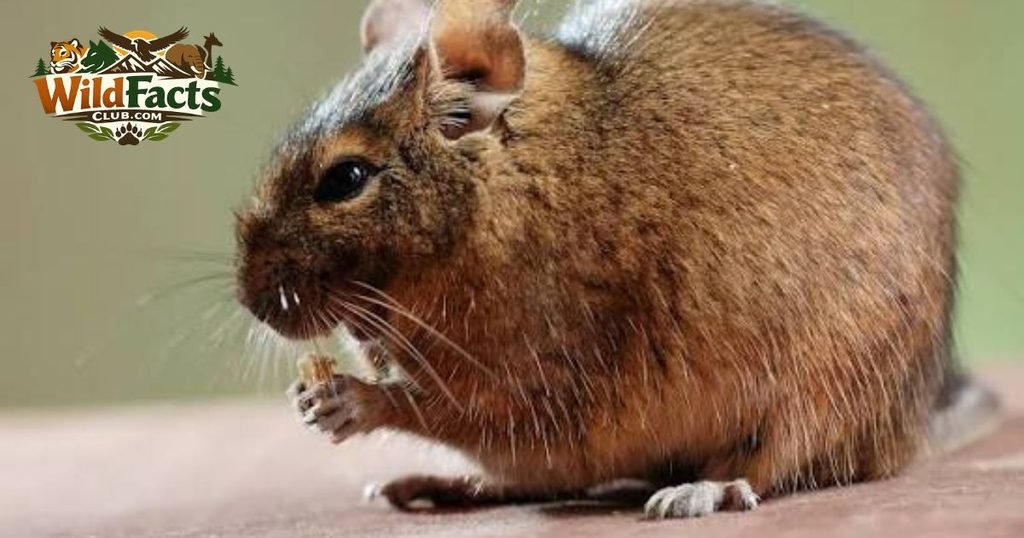
Degus are small South American rodents that can look somewhat like hamsters, although their bodies are generally more slender. They have rounded heads, large eyes, small ears, and soft brownish or grayish fur. Their tails are long and covered with fur, making them easy to distinguish from hamsters.
Degus are naturally found in Chile, where they live in dry grasslands and scrub environments. They are social animals and are often kept in groups. Their diet is mainly plant-based, and they spend considerable time digging, exploring, and interacting with members of their social group.
Jerboas
Jerboas are unusual rodents that may initially look like tiny hamsters but have dramatically different body proportions. They have small bodies, very large hind legs, tiny front legs, and long tails. These adaptations allow them to move through deserts using powerful hopping movements.
Jerboas are mostly nocturnal and spend the hottest part of the day inside burrows. They feed on seeds, plants, and sometimes insects, depending on the species. While their facial features and furry bodies can create a hamster-like appearance, their long legs and tail make them easy to identify once you look closely.
Chipmunks
Chipmunks are small squirrels that can sometimes resemble hamsters because of their rounded bodies and furry faces. Their most obvious difference is their distinctive stripes, which usually run along their backs. Chipmunks also have longer tails and larger eyes compared with hamsters.
They are excellent climbers and spend time searching for seeds, nuts, fruits, and insects. Their cheek pouches allow them to carry food, which is a feature that can make them especially hamster-like. However, chipmunks are members of the squirrel family and have a very different body structure and natural behavior.
Pikas
Pikas are small mammals related to rabbits rather than rodents, but their compact bodies can make them look surprisingly similar to hamsters. They have rounded bodies, short limbs, small rounded ears, and almost no visible tail. Pikas generally live in rocky mountain environments or cold grasslands, depending on the species.
They are herbivores that collect grasses and other plants. Their round appearance and small size are responsible for much of their hamster-like look. Unlike hamsters, however, pikas are lagomorphs, making them more closely related to rabbits and hares than to mice or rats.
Muskrats
Muskrats are much larger than hamsters, but their rounded bodies and small ears can sometimes create a similar appearance. They are semi-aquatic rodents commonly found near ponds, wetlands, rivers, and marshes. Muskrats have dense waterproof fur and long, laterally flattened tails that help them swim.
They mainly eat aquatic vegetation, although they may consume other available foods. Their larger size is the easiest way to distinguish them from hamsters. Muskrats are skilled swimmers and spend much of their lives around water, whereas hamsters are primarily terrestrial animals that live in burrows.
Ground Squirrels
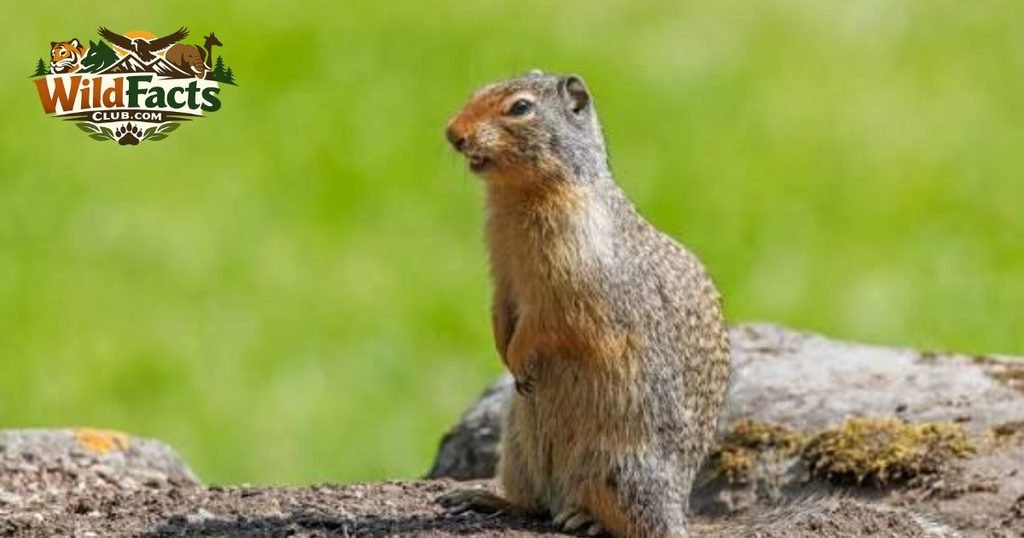
Ground squirrels can resemble hamsters because many species have compact bodies, short ears, and soft fur. They are generally larger than hamsters and have longer tails, but their rounded facial appearance can create confusion. Ground squirrels spend significant amounts of time on the ground and often create extensive underground burrow systems.
They eat seeds, fruits, plants, and insects depending on the species. Some ground squirrels hibernate or enter periods of dormancy during unfavorable seasons. Their ability to stand upright and their longer tails are useful characteristics for distinguishing them from true hamsters.
Prairie Dogs
Prairie dogs are larger rodents that can look hamster-like because of their rounded bodies, small ears, and short limbs. They are actually members of the squirrel family and live primarily in grassland environments of North America.
Prairie dogs are highly social and live in large underground communities known as colonies or towns. They mainly eat grasses and other vegetation. Their social behavior is very different from that of many hamster species, which are often solitary. Prairie dogs also have a larger body size and longer tails, making them easier to distinguish when their full bodies are visible.
Chinchillas
Chinchillas are small rodents famous for their extremely soft and dense fur. Their rounded bodies and large ears can give them a somewhat hamster-like appearance, although they are usually larger and have much longer tails.
Chinchillas are native to the Andes Mountains of South America and are adapted to cool, dry environments. They primarily eat grasses, herbs, and other plant material. Unlike hamsters, chinchillas are excellent jumpers and climbers. Their thick fur also requires special care because it is designed for cold mountain environments rather than warm, humid conditions.
Dwarf Hamsters
Dwarf hamsters are, of course, true hamsters, but they deserve special attention because their small size can make them look similar to other tiny rodents. Species and varieties such as Campbell’s dwarf hamsters and winter white dwarf hamsters have compact bodies, short tails, rounded ears, and soft fur. Their size makes them popular pets.
They also have cheek pouches for storing food and are generally most active during the evening and night. Although dwarf hamsters may resemble mice, gerbils, and other rodents, their characteristic body shape and cheek pouches help identify them.
How To Tell A Hamster From Similar Animals
Identifying a hamster becomes easier when you examine several physical characteristics instead of relying only on overall appearance. Hamsters generally have compact, rounded bodies, short tails, small ears, and noticeable cheek pouches.
Gerbils usually have longer tails and slimmer bodies, while mice have longer tails and larger ears. Guinea pigs are significantly larger and lack visible tails. Voles have short tails and small ears but generally do not have the same cheek-pouch structure as hamsters. Looking at body size, tail length, ear shape, face, and behavior can help you identify the animal correctly.
Hamsters And Gerbils: Main Differences
Hamsters and gerbils are two of the most commonly confused small rodents. Hamsters generally have rounder bodies and very short tails, while gerbils have slimmer bodies and long tails.
Hamsters are often solitary, especially certain adult species, whereas gerbils are social and commonly kept in pairs or groups. Gerbils also have longer hind legs and are excellent jumpers. Both animals are active and curious, but their behaviors are different. If you see a small furry rodent with a noticeably long tail, it is more likely to be a gerbil than a hamster.
Hamsters And Guinea Pigs: Main Differences
Although hamsters and guinea pigs are both popular pets, they are easy to distinguish when their size and body structure are considered. Guinea pigs are much larger, have stockier bodies, and do not have visible tails.
Hamsters are smaller, have shorter bodies, and possess cheek pouches. Guinea pigs are herbivores and require a diet rich in hay and vitamin C. Hamsters have a more varied diet that can include seeds, grains, vegetables, and protein sources. Guinea pigs are also highly social, while many hamster species prefer living alone as adults.
Hamsters And Voles: Main Differences
Voles and hamsters can look alike because both have rounded bodies, short tails, and small ears. However, they differ in habitat, behavior, and classification. Voles are generally wild animals that spend much of their time in grassy areas, forests, gardens, and fields.
Hamsters are naturally associated with burrows and dry habitats, although pet hamsters live in human homes. Voles mainly consume vegetation, roots, and seeds, while hamsters have a more varied diet. Their teeth, body proportions, and ecological habits can also help experts distinguish the two animals.
Why Do So Many Animals Look Like Hamsters?
Many small mammals look similar because they share adaptations suited to their environments. A compact body can help conserve heat, while small ears and short tails can reduce heat loss. Soft fur provides insulation, and strong front teeth help rodents gather and process food.
These similarities do not necessarily mean that the animals are closely related. Different species can independently develop similar physical characteristics through evolution. This process is known as convergent evolution. As a result, animals from different groups can have similar shapes and behaviors even though they have different evolutionary histories.
Read More: Hybrid Animals: Fascinating Animals Created by Different Species
Are Hamster-Like Animals Good Pets?
Some animals that look like hamsters make excellent pets, while others are wild animals that should not be kept as household companions. Gerbils, guinea pigs, mice, rats, degus, chinchillas, and certain hamsters are commonly kept as pets. Wild species such as voles, prairie dogs, and many ground squirrels have specialized needs and may not be suitable for ordinary homes.
Before choosing a small mammal, potential owners should research its diet, enclosure requirements, social needs, lifespan, and veterinary care. A cute appearance alone should never determine whether an animal is appropriate as a pet.
What Do Hamster-Like Animals Eat?
The diets of hamster-like animals vary considerably between species. Hamsters are generally omnivorous and eat seeds, grains, vegetables, fruits, and occasional sources of animal protein. Guinea pigs depend heavily on hay and plant foods, while chinchillas need a high-fiber diet. Gerbils eat seeds, grains, vegetables, and other suitable foods.
Voles mainly consume plants, roots, and seeds. Rats and mice are opportunistic omnivores capable of eating many different foods. Understanding the natural diet of each species is important because feeding an inappropriate diet can lead to nutritional problems and poor health.
Where Do Hamster-Like Animals Live?
Hamster-like animals occupy a wide variety of habitats around the world. Hamsters naturally occur in parts of Europe and Asia, depending on the species. Gerbils are associated with dry regions, while guinea pigs originate from South America. Degus are native to Chile, and chinchillas come from the Andes.
Voles can inhabit grasslands, forests, meadows, and agricultural landscapes. Pikas often live in mountainous or cold environments. Prairie dogs are associated with North American grasslands. These animals demonstrate that a hamster-like appearance can occur in deserts, mountains, forests, wetlands, and open grasslands.
Final Words
Animals that look like hamsters include gerbils, guinea pigs, voles, mice, rats, dormice, degus, jerboas, chipmunks, pikas, chinchillas, ground squirrels, and several other small mammals. Some are close relatives of hamsters, while others only share similar physical features.
Body shape, tail length, ear size, habitat, diet, and behavior can help distinguish these animals. Although their cute and rounded appearances may make them seem alike, every species has unique adaptations and needs. Learning these differences makes it easier to identify small mammals and appreciate the incredible diversity of animals around the world.
FAQs
What Animal Looks Most Like A Hamster?
Gerbils, voles, and some mice can look very similar to hamsters. Gerbils are particularly easy to confuse with hamsters because they are small, furry rodents often kept as pets. Their longer tails and slimmer bodies are the main differences.
What Is A Bigger Animal That Looks Like A Hamster?
Guinea pigs can look like larger hamsters because they have rounded, furry bodies and small ears. However, guinea pigs are much bigger and do not have visible tails. Their diet and social behavior are also different from those of hamsters.
Are Gerbils And Hamsters The Same Animal?
No, gerbils and hamsters are different animals. Both are rodents, but they belong to different groups. Gerbils generally have longer tails and slimmer bodies, while hamsters have rounder bodies and very short tails.