Animals Without Tails: Fascinating Creatures That Naturally Have No Tail
Animals have developed countless body shapes and physical features to survive in different environments. While many animals are easily recognized by their tails, some fascinating species naturally have little to no tail.
These animals without tails have adapted in unique ways, using other body parts and behaviors for balance, movement, communication, defense, and survival. From frogs and insects to certain mammals and birds, the animal kingdom contains many creatures that challenge our expectations about what an animal should look like.
What Are Animals Without Tails?
Animals without tails are species that naturally lack a visible external tail or have only a tiny tail-like structure. Their bodies have evolved according to their specific environments and lifestyles.
Some have no tail at all, while others possess a very short structure that is difficult to notice. A missing tail does not mean these animals are less capable. Instead, they have developed other adaptations that help them move, find food, escape predators, and reproduce successfully.
Why Do Some Animals Have No Tails?
Tails serve different purposes, including balance, steering, communication, climbing, and storing fat. However, not every animal needs a tail to survive. In some species, evolution favored a compact body that reduced unnecessary structures. Animals that live underground, swim, jump, or move primarily on the ground may benefit from different body designs. Over many generations, these adaptations can result in a species having a greatly reduced tail or no external tail.
Frogs
Frogs are some of the best-known animals without tails. Adult frogs generally have no visible tail, although their tadpoles develop tails during their early aquatic stage. As a frog undergoes metamorphosis, the tadpole’s tail is gradually absorbed, and its body develops legs and other adult features.
Frogs rely heavily on their powerful hind legs for jumping and swimming. Their streamlined bodies allow them to move efficiently through water and across land without requiring a tail for steering. Their lack of a tail is therefore an important part of their adult body structure.
Toads
Toads are closely related to frogs and also belong among animals without tails. Adult toads have compact bodies, short limbs, and no external tail. Their skin is often rougher and drier than that of many frogs, helping them survive in terrestrial environments.
Instead of using a tail for movement or balance, toads depend on their legs and body positioning. Many species spend much of their time on land and move through walking, short jumps, or hopping. Their tail-free body is well suited to their lifestyle.
Humans
Humans are also animals without external tails. Humans belong to the primate group, and although our ancestors had tail-bearing relatives, modern humans do not have an external tail. Instead, humans have a small internal structure called the coccyx, or tailbone.
The coccyx is located at the bottom of the spine and represents a reduced remnant of the tail structures found in our distant evolutionary history. Humans use many other features for balance and movement, including the spine, pelvis, legs, and feet.
Read More: Stubborn Animals: A Complete Guide to Animals Known for Strong-Willed Behavior
Great Apes
Great apes are another important group of animals without external tails. This group includes chimpanzees, bonobos, gorillas, orangutans, and humans. Unlike many monkeys, great apes do not have external tails.
Their bodies are adapted for different forms of movement. For example, some great apes spend considerable time climbing, swinging, or moving through trees. Their flexible shoulders, strong arms, hands, and body structures help them navigate their environments without needing a tail.
Gorillas
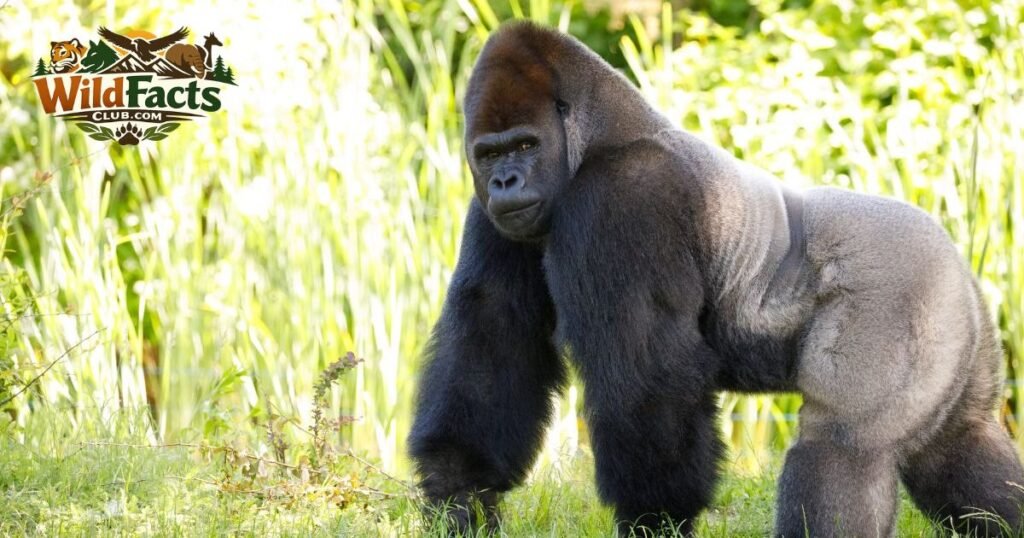
Gorillas are powerful animals without tails. They have large bodies, strong arms, and relatively short legs compared with many other mammals. Their body structure allows them to move efficiently across forests and other habitats.
Gorillas generally walk using all four limbs, with their knuckles supporting part of their weight. Their strength, posture, and muscular body provide stability without the need for a balancing tail.
Chimpanzees
Chimpanzees are intelligent primates that naturally lack external tails. They spend time both on the ground and in trees, where they use their arms, legs, hands, and feet for movement.
Their lack of a tail does not prevent them from climbing effectively. Their grasping hands and feet, flexible joints, and strong muscles allow them to move through branches and forest habitats. Their body design demonstrates that a tail is not essential for arboreal movement in every primate.
Orangutans
Orangutans are another example of tailless primates. These intelligent apes have long arms that are especially useful for navigating trees. Their hands and feet can grip branches, allowing them to move through forest canopies.
Instead of relying on a tail for balance, orangutans use their long limbs and body positioning. Their slow and deliberate movements through trees are supported by their powerful grasping abilities.
Koalas
Koalas are mammals without external tails. They are famous for spending much of their lives in eucalyptus trees. Although some people might expect a tree-dwelling mammal to have a long balancing tail, koalas show this isn’t necessary.
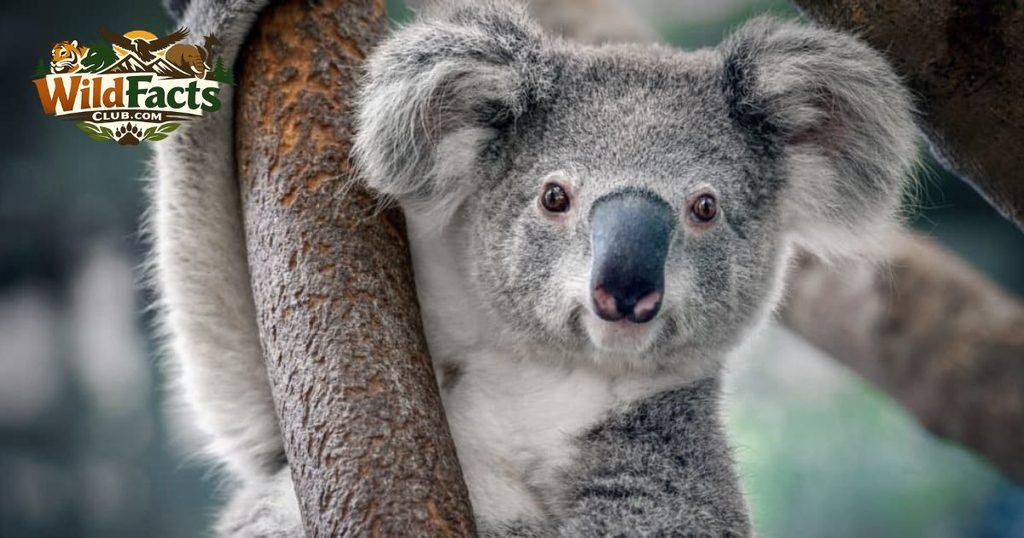
Koalas use strong limbs, sharp claws, and specialized feet to grip tree trunks and branches. Their compact body and powerful gripping abilities help them remain secure in trees.
Guinea Pigs
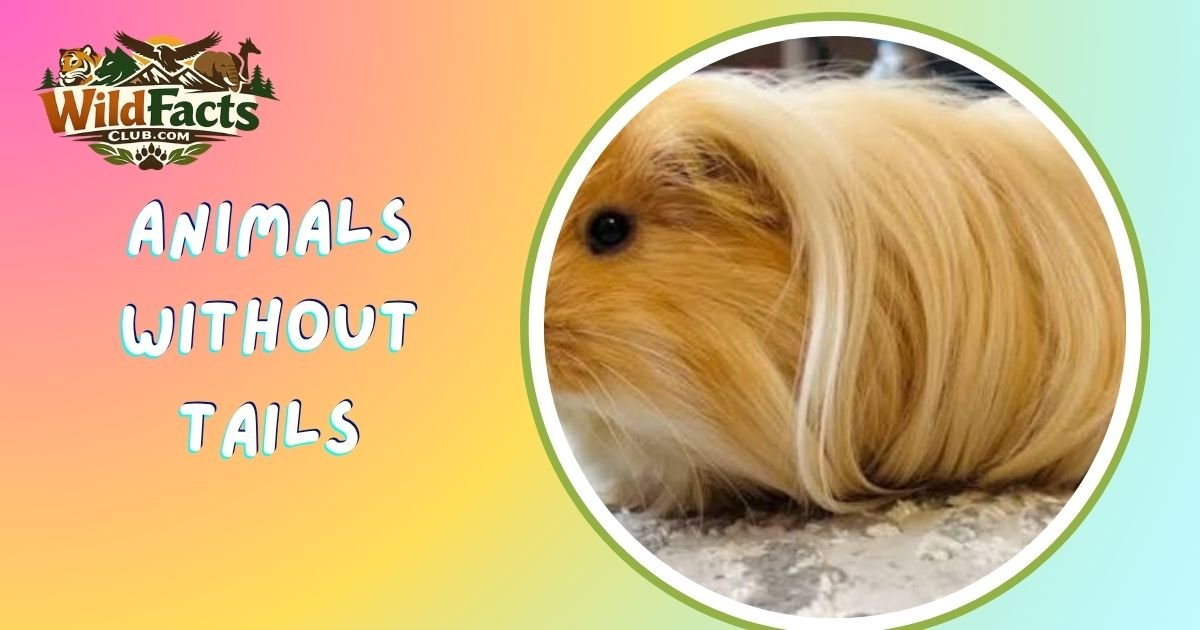
Guinea pigs are small mammals that have no visible external tail. They have compact bodies and short legs and are commonly kept as pets. Their ancestors lived in grassland and other South American environments.
Guinea pigs communicate through sounds, body movements, and other behaviors rather than through tail movements. Their short, rounded bodies are well suited to life close to the ground.
Capybaras
Capybaras are the world’s largest living rodents and are often included among animals without visible tails. They have stocky bodies, short legs, and a small tail that is not prominent like the long tails seen in many rodents.
Capybaras are semi-aquatic animals and are excellent swimmers. Their body shape allows them to move through water efficiently. They also have partially webbed feet that help them swim and navigate wet habitats.
Manatees
Manatees are large aquatic mammals that do not have a conventional tail like fish or many other aquatic animals. Instead, they have a broad, paddle-shaped tail called a fluke. Although this structure is technically a tail, it looks very different from the long external tails people commonly associate with animals. The fluke provides propulsion and helps manatees move through water. Their unusual tail structure makes them an interesting example when discussing animals that appear tailless.
Penguins
Penguins have a very short tail compared with many other birds. Their tail feathers are not long or prominent, so they may appear almost tailless at first glance.
Penguins use their streamlined bodies and flipper-like wings for swimming. Their short tail can assist with posture and balance when they are standing or moving on land, but it is very different from the long feathers seen in many birds.
Insects Without Obvious Tails
Many insects do not have tails in the way mammals and reptiles do. Their bodies are generally divided into three major sections: head, thorax, and abdomen. Some insects have structures at the end of the abdomen, but these are not necessarily tails.
Beetles, butterflies, ants, bees, and many other insects have no recognizable tail. Their body structures are designed around flight, walking, climbing, feeding, and reproduction rather than tail-based movement.
Animals Without Tails And Balance
A common function associated with tails is balance. However, animals without tails have developed other methods of maintaining stability. Primates can use their arms, legs, hands, feet, and body posture.
Frogs rely on their powerful legs and flexible bodies, while birds use wings, body position, and feathers. This demonstrates that balance does not depend on having a tail. Different animals solve the same physical challenges through different evolutionary adaptations.
How Do Animals Without Tails Move?
Animals without tails use a wide variety of movement strategies. Frogs jump using powerful hind legs, while humans walk upright using their legs and feet. Great apes climb with their arms and grasping hands. Snails crawl using muscular contractions, and insects use their legs or wings.
The absence of a tail therefore does not limit an animal to one particular lifestyle. Tailless species can swim, climb, jump, fly, walk, crawl, and run depending on their anatomy.
Are Tailless Animals Rare?
Animals without external tails are not especially rare. They occur across many different animal groups, including mammals, amphibians, birds, insects, and other invertebrates. Some species have completely lost an external tail through evolutionary changes, while others have very small or highly modified tail structures. The appearance of a tail varies greatly across species. A structure that looks like a tail in one animal may be completely different anatomically from a tail in another.
Difference Between Tailless And Short-Tailed Animals
It is useful to distinguish between animals that have no external tail and animals that simply have a very short one. A frog, for example, has no visible adult tail, whereas some animals have tiny tails that may be difficult to see.
Some mammals and birds have reduced tails that still contain bones or feathers. In these cases, describing them as completely tailless may be inaccurate. Their tails may simply be short, hidden, or highly modified.
Why Tails Are Not Essential For Every Animal
Evolution does not give every animal the same physical features. A tail can be beneficial for some species but unnecessary for others. If an animal can survive and reproduce successfully without a tail, there may be little evolutionary advantage to maintaining a large external one.
Body structures develop in relation to an animal’s environment and lifestyle. This is why the animal kingdom contains such a remarkable variety of body shapes, including creatures with long tails, short tails, curled tails, flat tails, and no obvious tails.
Interesting Facts About Animals Without Tails
Animals without tails can be found in many different habitats around the world. Frogs live in wetlands and forests, great apes inhabit tropical environments, koalas live in Australian forests, and humans occupy nearly every major habitat.
Some animals that appear tailless actually have small internal or reduced tail structures. Humans, for example, have a coccyx. Other animals may have short tails that are hidden by fur or feathers. These differences make the study of animal anatomy especially interesting.
Final Words
Animals without tails show how diverse and adaptable the animal kingdom can be. Frogs, toads, humans, great apes, koalas, guinea pigs, and many other creatures have evolved without a prominent external tail.
They rely on legs, arms, wings, body posture, specialized feet, or other structures for movement and balance. Some animals also have highly reduced or modified tails that are easy to overlook. Understanding these creatures helps us appreciate how evolution can produce many different solutions to the challenges of survival.
FAQs
Are Humans Animals Without Tails?
Yes, humans are animals without an external tail. Humans have a small tailbone called the coccyx at the base of the spine, which is considered a remnant of tail structures found in distant ancestors.
Why Do Some Animals Not Have Tails?
Some animals have evolved without external tails because their lifestyles do not require them. They may use other body parts for balance, movement, climbing, swimming, or communication. Evolution has produced many different body designs suited to different environments.
Do Frogs Have Tails?
Adult frogs generally do not have tails. However, frog tadpoles have tails during their aquatic larval stage. During metamorphosis, the tadpole’s tail is absorbed as the frog develops into its adult form.