Animals With Stripes: A Complete Guide to Striped Animals
Stripes are one of the most fascinating patterns found in the animal kingdom. From the bold black-and-white stripes of zebras to the delicate patterns of striped mice, many animals have developed stripes for different reasons.
These patterns can help animals camouflage themselves, communicate with one another, confuse predators, attract mates, or even regulate body temperature. The appearance, width, color, and direction of stripes can vary greatly between species.
When people think about animals with stripes, zebras are usually the first animals that come to mind. Stripes are found in many different groups of animals, including mammals, reptiles, fish, insects, and birds. Some animals have stripes covering almost their entire bodies, while others have only a few striped areas on their faces, tails, legs, or backs.
Scientists believe that animal patterns have developed through evolution because they provide useful advantages in particular environments. A striped animal living in a forest may use its pattern differently from a striped animal living in an open grassland. For example, zebra stripes may help make it difficult for predators to single out one individual when a herd is moving together.
Other striped animals use their patterns as warning signals or to blend into their surroundings. In this guide, we will explore some of the most interesting animals with stripes, learn what makes their patterns special, and understand how stripes help them survive.
List of Animals With Stripes
- Zebra
- Tiger
- Striped Hyena
- Okapi
- Chipmunk
- Striped Skunk
- African Wildcat
- Ring-Tailed Lemur
- Honey Badger
- Zebra Shark
- Clownfish
- Striped Marlin
- Striped Bass
- Striped Mouse
- Three-Toed Box Turtle
Zebra
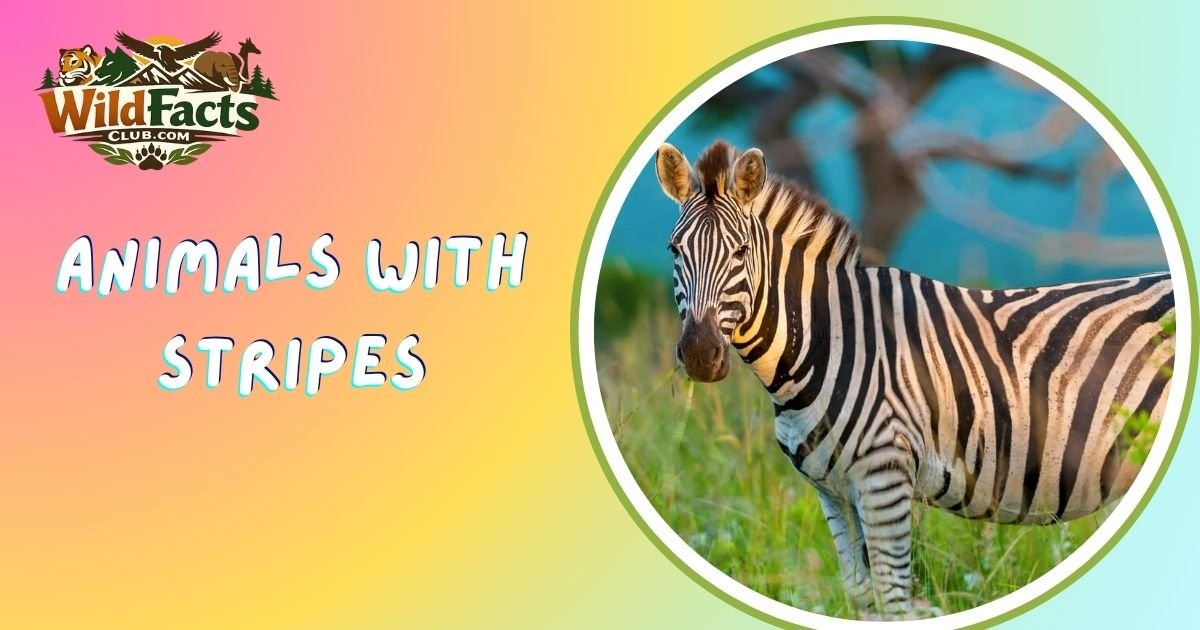
The zebra is perhaps the most famous example of an animal with stripes. Zebras are members of the horse family and are native to Africa. Their bodies are covered with distinctive black-and-white stripes, but no two zebras have the same pattern. Their stripes may help confuse predators such as lions when zebras move together in large herds.
The rapidly changing pattern of many zebras can make it difficult for a predator to focus on one individual. Stripes may also help discourage biting flies, according to scientific research. Zebras use their excellent eyesight, hearing, and strong legs to survive in African grasslands. Their unique appearance makes them one of the most recognizable wild animals in the world.
Tiger
Tigers are another well-known example of animals with stripes. Their orange coats are covered with dark vertical stripes that extend across their bodies, legs, and tails. These stripes are extremely useful for camouflage. Tigers often live in forests, grasslands, and areas containing tall vegetation.
The combination of shadows, plants, and stripes can make a tiger surprisingly difficult to see. Every tiger has a unique stripe pattern, and the pattern is useful for identifying individuals. Unlike humans, whose hair is colored only on the surface, a tiger’s skin also has pigmentation that follows its stripe pattern. Tigers are powerful predators that depend on stealth when hunting, making their striped coat an important part of their survival strategy.
Striped Hyena
The striped hyena is a fascinating mammal recognized by the dark stripes that run across its sandy or grayish coat. It is smaller and generally less powerful than the spotted hyena. Striped hyenas are found in parts of Africa, the Middle East, and Asia. Their stripes can help break up the outline of their bodies in dry landscapes and vegetation.
They are primarily nocturnal, meaning they are most active during the night. Their diet can include carrion, small animals, insects, fruits, and other available food. Striped hyenas have strong jaws and teeth that allow them to consume a variety of foods. Their unusual appearance and adaptable behavior make them an interesting member of the hyena family.
Okapi
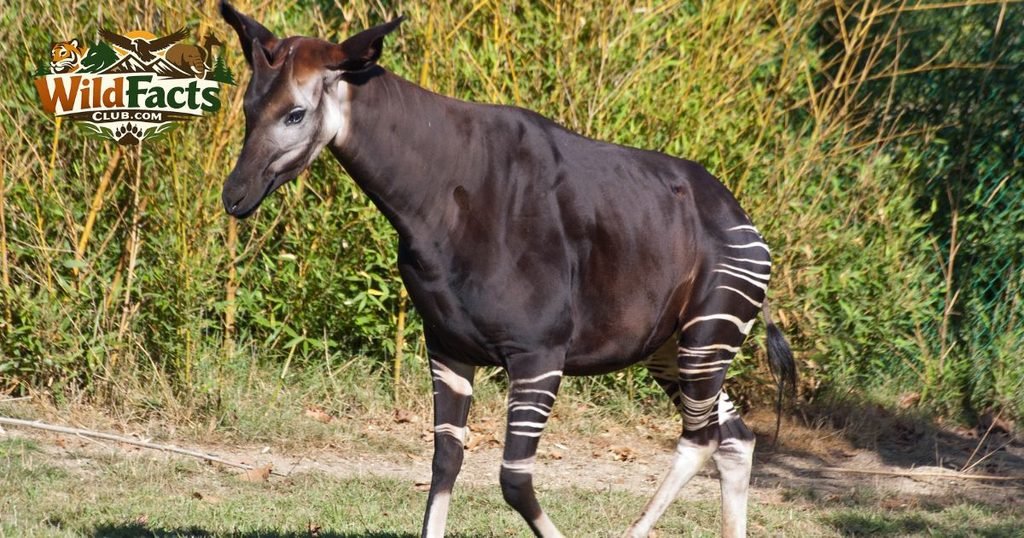
The okapi is a remarkable African mammal that looks like a combination of several different animals. It has a dark brown body, large ears, and zebra-like black-and-white stripes on its legs and hindquarters. Okapis live in the dense rainforests of the Democratic Republic of the Congo. Their striped legs may help them blend into the patterns of sunlight and vegetation found within the forest.
The stripes may also help young okapis follow their mothers through thick vegetation. Although an okapi resembles a zebra in certain ways, it is actually much more closely related to the giraffe. Okapis are shy and mostly solitary animals, making them difficult to observe in their natural forest habitat.
Chipmunk
Chipmunks are small mammals that are easily recognized by the stripes running along their backs. Depending on the species, chipmunks usually have alternating light and dark stripes extending from the head toward the tail. These patterns help them blend into woodland environments, where sunlight and shadows create a complicated background.
Chipmunks belong to the squirrel family and are known for their ability to store food in underground burrows. They commonly eat seeds, nuts, fruits, grains, and insects. Their cheek pouches allow them to carry food efficiently. Chipmunks are active and quick-moving animals, often seen running across the ground or climbing trees. Their striped appearance is one of their most distinctive characteristics.
Striped Skunk
The striped skunk is a North American mammal famous for its black body and two white stripes that usually extend from the head toward the tail. Its striking appearance serves as a warning to potential predators. When threatened, a skunk can release a strong-smelling defensive spray from glands near its tail. The odor can discourage predators from attacking.
Striped skunks are mostly nocturnal and highly adaptable. They can live in forests, grasslands, farmland, and even areas close to human settlements. Their diet is varied and may include insects, small animals, fruits, eggs, and plants. The combination of bold stripes and chemical defense makes the striped skunk particularly interesting.
African Wildcat
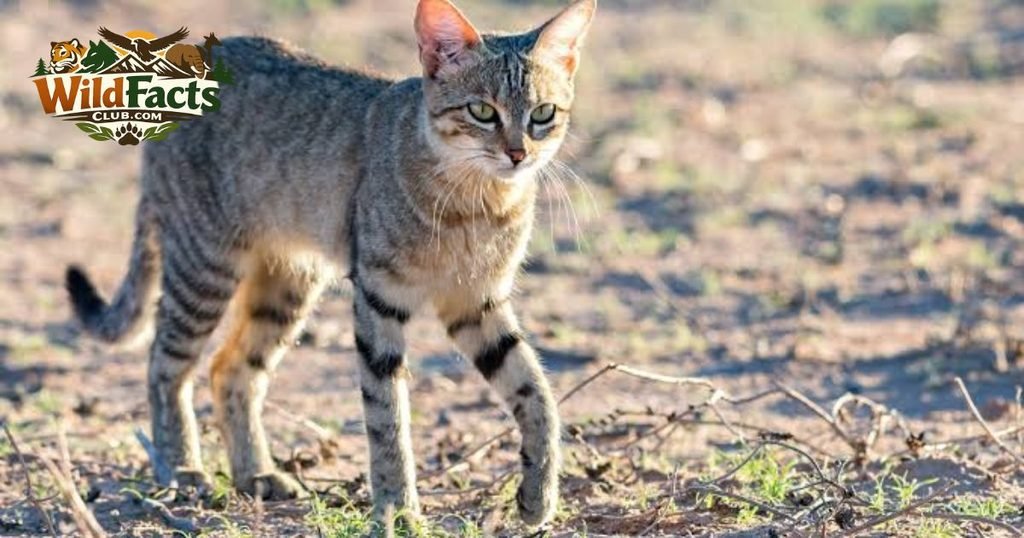
The African wildcat is a small wild feline that resembles a domestic cat. It commonly has dark stripes or markings on its legs, tail, and body. These markings help break up its outline and provide camouflage in grasslands, savannas, and scrubland. African wildcats are skilled hunters and mainly feed on small mammals, birds, reptiles, and insects.
They are generally solitary and are most active around dawn, dusk, or at night. Their striped legs and ringed tail are among their most noticeable features. Domestic cats are believed to have descended from wildcats related to this group. Their natural markings demonstrate how patterns can help predators remain hidden while approaching prey.
Ring-Tailed Lemur
The ring-tailed lemur is a famous primate from Madagascar. Although much of its body is gray, its long tail has alternating black and white rings, creating a distinctive striped appearance. These lemurs are highly social and live in groups called troops. Their tails are important for communication and movement because they are often held upright while the animals travel through their habitat.
Ring-tailed lemurs spend time both on the ground and in trees. They eat fruits, leaves, flowers, and other plant material. Their striped tails are especially useful for visual communication because group members can easily see one another when moving through vegetation. Their unusual appearance makes them one of Madagascar’s best-known animals.
Honey Badger
The honey badger has a distinctive body pattern consisting of a dark lower portion and a lighter gray or whitish upper section. Although it does not have narrow stripes like a zebra, the strong contrast across its body gives it a striped or two-toned appearance. Honey badgers are found in parts of Africa and Asia and are famous for their toughness.
They have strong claws, powerful jaws, and thick skin. Their diet is extremely varied and may include insects, small mammals, reptiles, birds, eggs, roots, and honey. Honey badgers are usually solitary and can defend themselves against larger predators. Their contrasting coat may also function as a warning signal, communicating that the animal can be difficult to attack.
Zebra Shark
The zebra shark is a marine animal whose appearance changes as it grows. Young zebra sharks have strong dark-and-light stripes, which give them their name. Adults develop a different pattern consisting of spots and lines. Zebra sharks are found in warm tropical and subtropical waters, particularly around coral reefs and sandy areas. They are generally slow-moving and spend much of their time near the seafloor.
Their long, flexible bodies and flattened shape allow them to move comfortably through their environment. Zebra sharks feed mainly on small fish, mollusks, crustaceans, and other marine organisms. Their changing body pattern is an excellent example of how an animal’s appearance can change during its life.
Clownfish
Clownfish are colorful marine fish that often have bold white stripes across orange, yellow, or reddish bodies. They are best known for their relationship with sea anemones. The stripes make clownfish highly recognizable and may help individuals identify members of their species. Their bright colors also make them visually striking among coral reefs.
Clownfish have a special protective relationship with sea anemones and can live among their stinging tentacles. In return, the fish may provide food or other benefits to the anemone. Different clownfish species have different stripe patterns and colors. Their combination of bright body colors and white stripes makes them one of the most popular fish in marine ecosystems.
Striped Marlin
The striped marlin is a large ocean fish known for its elongated body, pointed bill, and vertical blue or purple stripes. These stripes become particularly noticeable when the fish is active or excited. Striped marlin live in open ocean environments and are powerful swimmers. They feed on fish, squid, and other marine animals.
Their long upper jaw, known as a bill, helps them capture prey. Their bodies are designed for speed and efficient movement through the water. The striped pattern gives this marlin its common name and helps distinguish it from other marlin species. It is an impressive example of how stripes can occur even in large animals living far from land.
Striped Bass
Striped bass are freshwater and marine fish recognized by the dark horizontal stripes running along their silvery sides. They are native to North America and can live in both freshwater and saltwater environments during different parts of their lives. Their streamlined bodies allow them to swim efficiently and hunt smaller fish and other aquatic organisms.
The horizontal stripes are one of their most recognizable characteristics. Striped bass are also important to recreational and commercial fisheries in several regions. Their pattern demonstrates that stripes do not always run vertically or appear on land animals. Instead, stripes can take many forms depending on the species and its environment.
Striped Mouse
Striped mice are small rodents that have noticeable lines running along their backs. These patterns vary between species, but many striped mice have light and dark bands that help them blend into grasses and other vegetation. Their small size makes camouflage especially important because they can be hunted by birds of prey, snakes, and larger mammals.
Striped mice usually feed on seeds, plants, insects, and other small food sources depending on the species. They are often active during specific times of the day or night to reduce the risk of predation. Their striped coats are a simple but effective example of how coloration can help a small animal survive in a challenging environment.
Three-Toed Box Turtle
The three-toed box turtle is a land turtle associated with the central and southern parts of the United States. It has a rounded shell that may display patterns of yellow, brown, olive, or darker markings. Some individuals can have lines or stripe-like patterns across their shell, legs, or head.
Its strong shell protects it from predators, while its coloration helps it blend into woodland environments. The turtle is named for the three toes commonly found on its hind feet. Three-toed box turtles are omnivorous and may eat insects, worms, fruits, mushrooms, and plants. Their patterned bodies demonstrate that stripes and markings can appear in many different forms among reptiles.
Why Do Animals Have Stripes?
Animals develop stripes for several biological and ecological reasons. One of the most important is camouflage. Stripes can break up an animal’s body outline and make it harder for predators or prey to recognize its exact shape. Tigers are a strong example because their stripes blend with shadows and vegetation.
Stripes can also help animals communicate. Some species use distinctive markings to recognize members of their own group or species. In social animals, visual patterns may help individuals stay together.
Another possible function is protection. Some strongly contrasting patterns act as warning signals. The striped skunk, for example, has a noticeable appearance that can advertise its defensive ability.
Different Types of Stripes in Animals
Not all stripes look the same. Some animals have vertical stripes, such as tigers and zebras. Others have horizontal stripes, like striped bass. Some species have stripes only on their tails, while others have stripes across their entire bodies.
Stripes can also differ in width and color. They may be black and white, brown and cream, orange and black, or many other combinations. In some animals, the stripes are clear and bold, while in others they are subtle and difficult to notice.
The location of stripes can also tell scientists about an animal’s species, age, behavior, or development. Individual zebra stripe patterns, for example, can be used to distinguish one zebra from another.
Read More: Skinny Animals: Simple List of Naturally Skinny Animals
Are Stripes Always Used for Camouflage?
Stripes are not always designed for camouflage. Their purpose depends on the species and its environment. A tiger’s stripes can help it hide in vegetation, while a skunk’s bold stripes can function as a warning.
Some stripes are important for communication, allowing animals to recognize individuals or members of their own species. In fish, stripes may also make it easier for individuals to identify one another in busy underwater environments.
This means that the same basic pattern can serve completely different purposes in different animals. Evolution has shaped these patterns according to each species’ particular needs and surroundings.
How Stripes Help Animals Survive
Survival in the wild depends on avoiding predators, finding food, reproducing, and adapting to the environment. Stripes can contribute to several of these activities. Camouflage can make predators harder to detect, while warning patterns can prevent dangerous encounters.
For predators such as tigers, stripes may help them approach prey without being noticed. For prey animals, patterns can help them blend into vegetation or confuse predators. Social animals may also use patterns for recognition and communication.
The effectiveness of stripes depends on the animal’s habitat. A pattern that works well in a forest may not provide the same advantage in an open desert. This is why striped patterns vary so greatly throughout the animal kingdom.
Final Words
There are many fascinating animals with stripes, and their patterns are far more than simple decoration. Zebras, tigers, striped hyenas, okapis, chipmunks, skunks, lemurs, fish, and many other animals have developed distinctive markings that can help them survive.
Stripes can provide camouflage, warning signals, communication benefits, or protection from certain insects. Some animals have stripes across their entire bodies, while others have them only on their tails, legs, faces, or sides.
The variety of striped animals demonstrates the incredible diversity of nature. Every stripe pattern has a story connected to evolution, habitat, behavior, and survival. By studying these patterns, scientists can better understand how animals interact with their environments and how different species have adapted over time.
Whether it is the unmistakable pattern of a zebra, the powerful stripes of a tiger, or the colorful markings of a clownfish, striped animals continue to capture human attention. Their unique appearances remind us that nature uses countless forms, colors, and patterns to help living creatures survive in the world around them.
FAQs
Why Do Animals Have Stripes?
Animals have stripes for different reasons. Stripes may help them blend into their surroundings, confuse predators, attract mates, or recognize members of their own species.
What Are Some Common Animals With Stripes?
Common animals with stripes include zebras, tigers, striped hyenas, chipmunks, skunks, and okapis. Their stripes can help with camouflage, communication, identification, or protection.
Which Animal Is Famous For Having Black And White Stripes?
The zebra is one of the most famous animals with black and white stripes. Each zebra has a unique stripe pattern, which can help researchers identify individual animals.
Do Stripes Help Animals Survive?
Yes, stripes can provide important survival benefits. Depending on the species, they may provide camouflage, make it harder for predators to target an individual, or help animals communicate with one another.