Animals With Long Tails: Fascinating Animals With Remarkable Tails
Animals with long tails can be found in forests, grasslands, deserts, oceans, and many other habitats around the world. Tails serve different purposes depending on the animal, including balance, climbing, communication, swimming, defense, and storing fat.
Some animals have tails that are longer than their bodies, while others have long, muscular, or flexible tails suited to their lifestyles. Monkeys, cats, reptiles, rodents, and many other creatures have developed impressive tails through evolution. Their different tail shapes and functions make these animals particularly interesting to study.
Why Do Animals Have Long Tails?
Long tails provide animals with several useful advantages. Arboreal animals often use their tails for balance while moving through trees and jumping between branches. Some monkeys have prehensile tails that can grip branches like an extra limb. Ground-dwelling animals may use their tails for communication, balance, or protection from insects.
Aquatic animals use tail structures to generate movement through water. A long tail can also help animals display emotions, attract mates, or warn other members of their species. Its exact purpose depends on the animal and its environment.
Giraffes
Giraffes have long tails that help them deal with their open grassland environment. Their tails end in a dark tuft of hair, which they use to swat away flies and other irritating insects. Although their tails are not nearly as long as their necks, they are an important part of their body design. Giraffes also use their long legs and necks to reach vegetation high above the ground. Their tails work alongside other physical adaptations that help them survive in African savannas and woodlands.
Long-Tailed Macaques
Long-tailed macaques are primates known for their noticeably long tails, which can be similar in length to or longer than their bodies. Their tails are particularly useful for maintaining balance as they climb, leap, and move through trees. These monkeys are found in parts of Southeast Asia and occupy forests, mangroves, coastal areas, and locations influenced by humans. Their flexible limbs and tails allow them to navigate branches effectively. The long tail is therefore an important physical adaptation that supports movement through complex environments.
Spider Monkeys
Spider monkeys are among the most impressive animals with long tails. Their tails are highly flexible and can be used as an additional gripping structure when climbing. The underside of the tail has a sensitive gripping surface that helps the monkey hold onto branches. Spider monkeys use their tails while reaching for food and moving through the forest canopy. They are primarily found in tropical forests of Central and South America. Their combination of long limbs and a powerful prehensile tail makes them exceptionally well adapted to life in trees.
Read More: Animals That Look Like Hamsters: Cute Hamster-Like Animals
Howler Monkeys
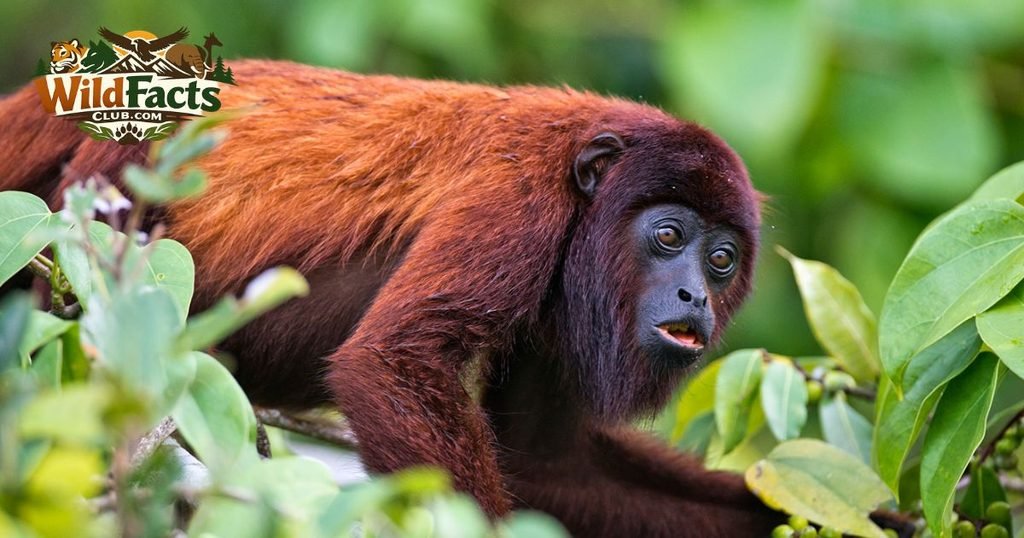
Howler monkeys have long, strong, prehensile tails that help them move through forest canopies. Their tails can provide support while they reach for leaves, fruits, and other food. Howler monkeys are also famous for their loud vocalizations, which can travel long distances through dense forests. They inhabit tropical regions of Central and South America. Their tails are an important part of their climbing abilities, allowing them to maintain stability while using their hands and feet for feeding. This adaptation helps them exploit food sources high above the ground.
Capuchin Monkeys
Capuchin monkeys have long tails that contribute to balance and movement through trees. Some capuchin species have tails that can provide limited gripping assistance, although their tails are generally less specialized for grasping than those of spider monkeys. These intelligent primates live primarily in Central and South American forests. They have strong hands and flexible limbs that allow them to climb and explore their surroundings. Their tails complement these adaptations by helping maintain stability while they travel through branches and search for fruits, insects, seeds, and other foods.
Squirrels
Squirrels are familiar animals with long, bushy tails that play several important roles. Their tails help them balance while running along branches and jumping between trees. They can also use their tails as visual signals when communicating with other squirrels. During cold weather, a squirrel may wrap its bushy tail around its body for additional insulation.
In some situations, the tail can also help squirrels appear larger to potential threats. Their combination of climbing ability, sharp claws, and long tails makes squirrels highly adapted to woodland environments.
Red Pandas
Red pandas have long, thick, ringed tails that are nearly as long as their bodies. Their tails help them maintain balance while climbing through trees in mountainous forests. The thick fur also provides insulation in the cool environments where they live.
Red pandas are native to parts of the Himalayas and southwestern China, where they spend much of their time in trees. Their reddish-brown fur provides camouflage among branches and vegetation. Their long tail is one of their most recognizable physical characteristics and an important climbing adaptation.
Lemurs
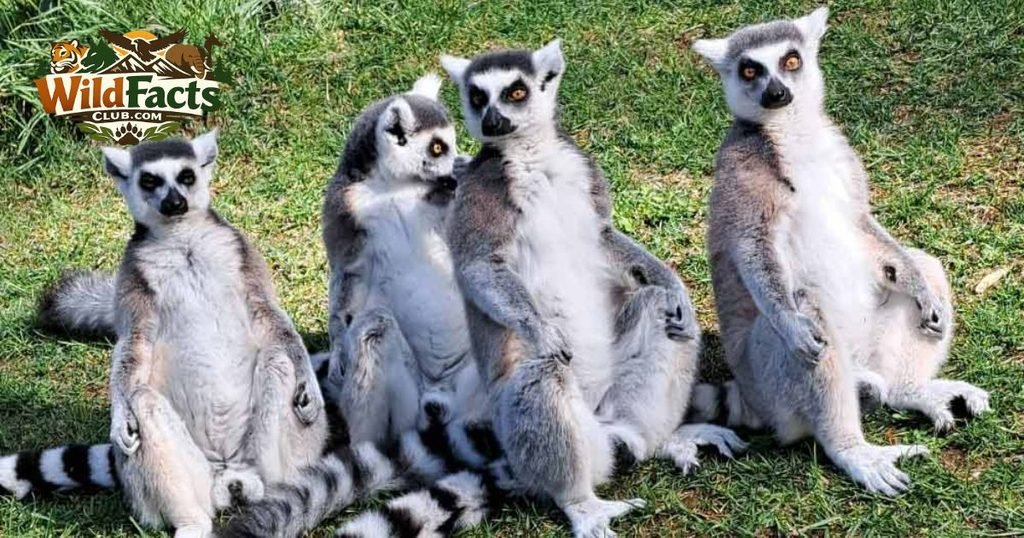
Many lemur species have remarkably long tails, although tail length differs considerably among species. Ring-tailed lemurs are especially recognizable because of their long, black-and-white striped tails. Their tails help with balance as they move across branches and can also play a role in communication. Unlike some monkeys, lemurs generally cannot use their tails as gripping limbs. Ring-tailed lemurs live mainly on the island of Madagascar, where they occupy dry forests, scrublands, and other habitats. Their distinctive tails make them easy to recognize.
Cheetahs
Cheetahs have long, muscular tails that are essential for their extraordinary running ability. When a cheetah accelerates at high speed, its tail helps provide balance and stability while the animal makes rapid turns. This is especially important when chasing fast-moving prey across open grasslands. The tail acts somewhat like a steering aid, helping the cheetah control its body during sudden changes in direction. Combined with long legs, a flexible spine, and lightweight body structure, the cheetah’s tail supports its specialized adaptation for high-speed pursuit.
Lions
Lions have long tails that assist with balance and communication. Their tails end in a distinctive tuft of hair, which makes them easy to identify. Lions use their tails while walking, running, and changing direction, particularly when moving across uneven terrain.
Tail movements can also communicate information about behavior and mood. Lions live in social groups called prides and spend considerable time interacting with one another. Their tails are therefore useful not only for physical movement but also as part of their body language.
Tigers
Tigers have long, muscular tails that help them maintain balance while walking, running, climbing, and turning. This is especially useful because tigers frequently move through forests, grasslands, wetlands, and other environments with uneven terrain.
Their tails can also contribute to body communication. Tigers are solitary animals for much of their lives, so visual signals can be important during encounters with other individuals. The striped pattern of a tiger extends onto its tail, helping it maintain camouflage while moving through vegetation and shadowed habitats.
Snow Leopards
Snow leopards have exceptionally long, thick tails that are particularly useful in their mountainous habitat. Their tails help them balance while navigating steep rocky slopes and jumping across uneven surfaces. The thick fur also provides warmth in the cold environments of Central and South Asia. When resting, a snow leopard can wrap its tail around its body and face for additional insulation. Their long tails work together with powerful hind legs, large paws, and flexible bodies to help them move through rugged mountain landscapes.
Kangaroos
Kangaroos have large, muscular tails that are very different from the furry balancing tails of squirrels or monkeys. Their tails act as powerful supports when they move across the ground. During slow movement, kangaroos can use their tails along with their hind legs and forelimbs as part of a distinctive form of locomotion.
During faster movement, the tail contributes to balance and stability. Kangaroos are native to Australia and are particularly well adapted to open grasslands, woodlands, and other environments where efficient movement is important.
Monitor Lizards
Monitor lizards can have long, muscular tails that are important for movement and defense. Species such as the water monitor have powerful tails that help them swim efficiently, while their tails can also be used defensively when threatened. Their long bodies and tails make them effective swimmers and climbers depending on the species. Monitor lizards are found across Africa, Asia, and Australia. Their tails vary in shape and length, but in many species they form a major part of the animal’s overall body length.
Komodo Dragons
Komodo dragons have long, powerful tails that help support their large bodies. Their tails are muscular and can be used for balance while walking across uneven terrain. They also use their tails during interactions with other individuals and may employ them defensively. Komodo dragons are native to several Indonesian islands and occupy dry forests, savannas, and coastal areas. Their strong legs, claws, jaws, and tails make them well suited to their environment. The tail is an important part of the body structure of these giant lizards.
Crocodiles
Crocodiles have long, muscular tails that are essential for swimming. Their tails move from side to side, pushing against water and providing powerful propulsion. The tail also helps crocodiles steer and maneuver while hunting or escaping danger. On land, their tails contribute to overall balance and movement.
Crocodiles spend much of their lives around rivers, lakes, wetlands, and coastal habitats. Their streamlined bodies and powerful tails make them highly effective aquatic predators. The tail is one of the most important structures involved in their swimming ability.
Alligators
Alligators also have long, strong tails that provide most of the power needed for swimming. Their tails are laterally flattened, allowing them to push large amounts of water as they move. They can remain surprisingly still in water and then use their tails to make quick movements when necessary.
Alligators also use their tails for balance while moving on land. Their heavily armored bodies and muscular tails are well suited to freshwater wetlands, lakes, rivers, and swamps where they spend much of their time.
Rats
Rats have long, mostly hairless tails that perform several useful functions. Their tails help them maintain balance while climbing, moving across narrow surfaces, and navigating their surroundings. The tail also plays a role in regulating body temperature because rats can release heat through it.
Different rat species have different tail lengths and appearances. Rats are highly adaptable mammals found in cities, farms, forests, and many other environments. Their long tails are an important part of their physical adaptation and contribute to their ability to navigate complex habitats.
Fennec Foxes
Fennec foxes have moderately long, bushy tails that contribute to balance and communication. Their tails are useful when moving across sandy desert landscapes and can also provide warmth when the animal rests.
Fennec foxes are famous for their enormous ears, which help dissipate heat and detect sounds. They are native to the deserts of North Africa. Their small bodies, large ears, furry feet, and bushy tails work together as adaptations to hot and dry conditions. Their tail also adds insulation during cooler desert nights.
Ring-Tailed Cats
Ring-tailed cats are small mammals with long, striped tails that make up a significant portion of their overall body length. Despite their name, they are not true cats and belong to the raccoon family. Their tails help with balance while climbing and moving across rocky landscapes and trees. They are primarily found in parts of the southwestern United States and Mexico. Ring-tailed cats are agile and largely nocturnal. Their long, banded tails are one of their most distinctive physical features.
Why Are Long Tails Useful?
Long tails can provide several advantages depending on an animal’s lifestyle. In monkeys and other tree-dwelling animals, tails can provide balance or even act as gripping structures. Predators such as cheetahs use their tails to stabilize their bodies during rapid movement.
Aquatic reptiles use muscular tails for propulsion, while kangaroos rely on their powerful tails for support and balance. Some animals also use tails for communication, warmth, or defense. This variety demonstrates that the same body structure can serve completely different purposes across animal species.
Animals With the Longest Tails
Some animals have tails that are extremely long relative to their body size. Certain monkeys have tails that can exceed their body length, while species such as spider monkeys use their long tails for grasping branches.
Some lizards also possess tails that account for a substantial portion of their total length. The exact length varies between species and individuals. A long tail does not necessarily mean the animal is closely related to another long-tailed species because tails have evolved independently in many different animal groups.
Final Words
Animals with long tails demonstrate the remarkable variety of adaptations found throughout nature. From spider monkeys using their tails to grip branches to crocodiles using powerful tails for swimming, these structures serve many important purposes.
Cheetahs depend on their tails for stability during high-speed chases, while squirrels use theirs for balance, communication, and warmth. Kangaroos have muscular tails that support movement, and snow leopards use their thick tails for balance and insulation. Whether used for climbing, running, swimming, or communication, long tails are valuable adaptations that help animals survive.
FAQs
Which Animals Have Long Tails?
Monkeys, lemurs, squirrels, kangaroos, foxes, and lizards have long tails.
Why Do Animals Have Long Tails?
Long tails help animals with balance, movement, communication, and defense.
Which Animal Has A Very Long Tail?
The giraffe has a very long tail that can reach about 1 meter.