Animals With Big Eyes: A Fascinating Guide to Nature’s Wide-Eyed Creatures
Animals with big eyes are among the most fascinating creatures in the natural world. Their large, expressive eyes often make them look cute, curious, or even surprised. Big eyes are not only about appearance. In many species, large eyes have developed as an important adaptation that helps animals survive in their environments. Big eyes can provide better vision in darkness, help predators locate prey, or allow animals to detect movement from a distance.
Nocturnal animals especially benefit from larger eyes because they need to collect as much available light as possible. From tiny primates and insects to ocean animals and unusual mammals, many creatures have developed remarkably large eyes. In this article, we will explore some of the most interesting animals with big eyes and learn why their eyes are so important.
Why Do Some Animals Have Big Eyes?
Large eyes usually develop because an animal needs excellent vision for survival. One of the most common reasons is living in low-light environments. Nocturnal animals are active at night, when there is much less light available. Bigger eyes can allow more light to enter the eye, improving an animal’s ability to see its surroundings.
Some animals also have large eyes because they are predators that need to detect prey quickly and accurately. Others use their vision to identify predators and escape danger. The size of an animal’s eyes is also related to its body size and lifestyle. A small animal with unusually large eyes may have evolved them because vision is especially important to its survival.
List Of Animals With Big Eyes
- Tarsier
- Slow Loris
- Owl
- Bush Baby
- Chameleon
- Tree Frog
- Rabbit
Tarsier
The tarsier is one of the most famous animals with big eyes. This tiny primate is found in parts of Southeast Asia and is especially well known for its enormous eyes relative to its body. Each eye is extremely large compared with the size of its head, giving the tarsier an unusual appearance.
Tarsiers are primarily nocturnal, so their large eyes are extremely useful for seeing in darkness. They spend much of their time in trees and use their excellent vision to locate insects and other small prey. Their eyes cannot rotate within their sockets like human eyes, so tarsiers can turn their heads significantly to look around. Their large eyes, strong hind legs, and sensitive hearing make them highly specialized hunters.
Slow Loris
The slow loris is another fascinating primate known for its large, round eyes. These animals live in forests across parts of South and Southeast Asia. Slow lorises are nocturnal, meaning they spend much of their active time at night. Their large eyes help them collect available light and navigate through branches in dark forest environments.
Their forward-facing eyes also provide good depth perception, which is useful when moving between branches. Slow lorises are generally slow-moving compared with many other mammals, but their excellent senses help them locate food and avoid threats. Their distinctive eyes contribute greatly to their cute appearance, making them one of the most recognizable animals with big eyes.
Read More: Animals That Eat Honey: A Complete Guide to Honey-Loving Animals
Owl
Owls are among the best-known animals with large eyes. Their eyes are relatively large compared with their skulls and are specially adapted for hunting in low-light conditions. Unlike humans, owls have tubular eyes that are held firmly in their sockets. This structure helps provide excellent vision but means they cannot move their eyes around in the same way people can. Instead, owls compensate by turning their heads.
Their large eyes gather available light, allowing them to detect prey during nighttime hunting. Many owls also have excellent depth perception because their eyes face forward. This combination of large eyes, sharp hearing, and specialized feathers makes owls highly effective nocturnal predators.
Bush Baby
Bush babies, also called galagos, are small African primates with remarkably large eyes. They are nocturnal animals that spend much of their lives moving through trees and shrubs. Their large eyes are an important adaptation for nighttime activity. Bush babies eat insects, fruit, tree gum, and other foods depending on the species.
Their excellent night vision helps them find food while avoiding predators. They also have strong legs that allow them to make impressive leaps between branches. The combination of big eyes, sensitive hearing, and powerful jumping ability makes bush babies highly specialized for life after sunset. Their large eyes also give them an adorable appearance that attracts considerable attention.
Chameleon
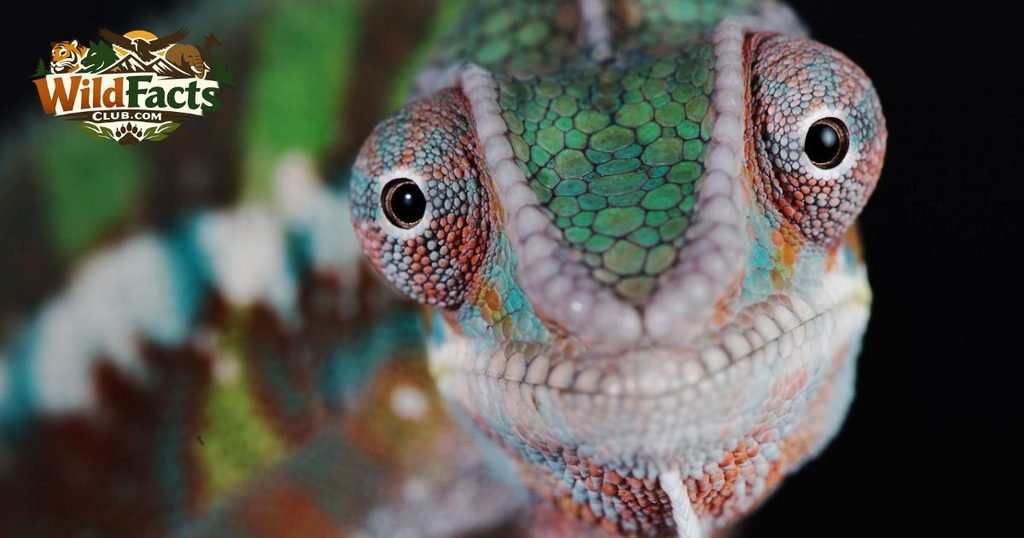
Chameleons are unusual reptiles with distinctive eyes that appear large compared with their heads. Their eyes are especially interesting because each eye can move independently. This gives chameleons a wide field of vision and allows them to monitor different directions at the same time.
When a chameleon spots prey, it can focus both eyes toward the target, helping it judge distance before using its long, fast tongue. Their unusual eyes are therefore closely connected to their hunting strategy. Chameleons are also able to detect movement effectively, which can help them notice predators. Their large, independently moving eyes make them one of the most remarkable reptiles with big eyes.
Tree Frog
Many tree frogs have large, prominent eyes that contribute to their distinctive appearance. The red-eyed tree frog is particularly famous for its enormous bright eyes. These eyes are useful for detecting movement and navigating through nighttime environments. Many tree frogs are active during the evening or night, so good vision can be valuable for finding food and avoiding predators.
Their large eyes also have an interesting role in defensive behavior. When some frogs suddenly open their eyes, the unexpected appearance can startle a predator and allow the frog to escape. Their combination of large eyes, colorful bodies, and climbing abilities makes tree frogs especially fascinating.
Rabbit
Rabbits have relatively large eyes positioned on the sides of their heads. This arrangement gives them a broad field of view, which is extremely useful for prey animals. Rabbits need to watch for predators approaching from different directions, and their side-positioned eyes help them monitor their surroundings without constantly turning their heads.
Their vision also allows them to detect movement across a wide area. Although rabbits are often active around dawn and dusk, their eyes are well adapted to different lighting conditions. Their large eyes are therefore connected to their role as prey animals and their need to remain alert in open environments.
Deer
Deer are mammals with large, dark eyes that provide them with a wide field of vision. Like many prey animals, deer benefit from being able to notice potential predators from different directions. Their eyes are positioned toward the sides of the head rather than directly in front, giving them broad visual coverage.
Deer are also capable of seeing well in relatively low-light conditions, which is useful because many species are active during dawn, dusk, or nighttime. Their large eyes contribute to their gentle appearance, but they serve an important survival purpose. Good vision allows deer to monitor their environment while feeding, traveling, or caring for young.
Gecko
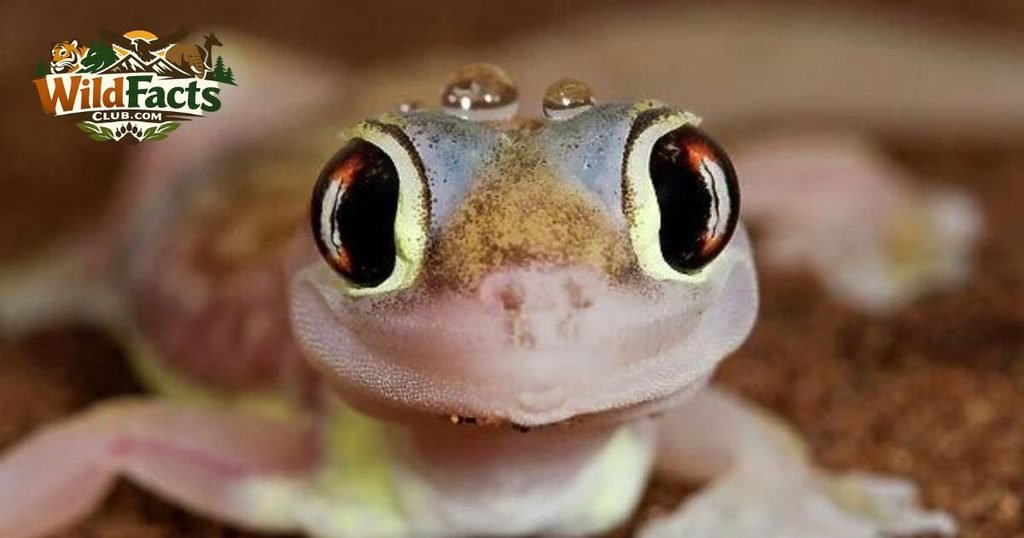
Many geckos have noticeably large eyes, especially species that are active at night. Their eyes can be highly sensitive to low levels of light, helping them hunt and navigate after sunset. Some geckos also have vertically shaped pupils that can change size depending on the amount of light. Geckos use their vision to detect insects and other small prey.
Their eyes also help them recognize movement and respond quickly to potential danger. The large eyes of many gecko species are a good example of how nocturnal animals can evolve specialized visual systems for life in dim environments.
Why Big Eyes Help Nocturnal Animals
Big eyes are especially common among animals that are active at night. During daylight, there is plenty of light available for vision. At night, however, the amount of light can be extremely limited. A larger eye can allow more light to enter, which can improve an animal’s ability to see in dark conditions.
This is particularly helpful for predators searching for food and prey animals trying to detect danger. Many nocturnal animals also have other adaptations that improve night vision, such as specialized retinas or reflective structures. Together, these features help them make better use of limited light. This is why many animals with big eyes are naturally active after sunset.
Are Animals With Big Eyes More Sensitive To Light?
Not necessarily. Large eyes can improve the amount of light entering the eye, which is beneficial in dark conditions, but animals also have mechanisms for controlling how much light reaches sensitive visual cells. Pupils can change size, and different species have specialized structures that help them function under varying light levels.
An animal adapted for nighttime activity may have eyes that work exceptionally well in darkness while still being capable of functioning during daylight. However, the exact visual abilities differ from species to species. Big eyes are one part of a larger visual system rather than a guarantee that an animal will see better in every environment.
Big Eyes And Predator Detection
For many prey animals, good vision can mean the difference between escaping and being caught. Animals such as rabbits and deer have eyes positioned toward the sides of their heads, providing a broad field of view. This allows them to monitor a large portion of their surroundings while eating or moving.
Other animals, particularly predators, may have forward-facing eyes that provide better depth perception. This helps them accurately judge the distance to prey. Therefore, eye size and eye position both matter. Looking at an animal’s eyes can often provide clues about whether it is primarily adapted for detecting threats, hunting prey, or navigating its environment.
Why Big Eyes Make Animals Look Cute
Humans often find animals with large eyes especially cute. This may be because large eyes resemble certain features associated with young children, including relatively large eyes and rounded faces. Scientists sometimes discuss this response using the concept of baby schema, which describes physical features that can trigger nurturing or affectionate reactions in humans.
Animals such as tarsiers, bush babies, slow lorises, and sugar gliders have large eyes that make their faces appear especially expressive. Their appearance may attract human attention, but their eyes evolved for practical biological reasons. In most cases, the visual appeal is simply a result of adaptations that help these animals survive.
How Animals With Big Eyes Survive
Having large eyes is useful, but survival depends on many adaptations working together. A nocturnal animal may need excellent hearing, sensitive whiskers, strong climbing abilities, camouflage, or a specialized diet in addition to good eyesight. For example, a tarsier combines large eyes with powerful legs and strong hunting abilities. Owls combine large eyes with exceptional hearing and silent flight.
Chameleons combine specialized eyes with a rapidly extending tongue. These examples show that large eyes are usually part of a complete survival strategy. Nature rarely relies on one feature alone. Instead, different adaptations work together to help an animal find food, avoid predators, reproduce, and survive.
Animals With The Biggest Eyes Relative To Their Body
When discussing animals with the biggest eyes, it is important to consider body size. Some animals have very large eyes in absolute terms, while others have eyes that are enormous relative to their bodies. The tarsier is a remarkable example because its eyes are huge compared with its small body.
Tiny nocturnal primates such as mouse lemurs also have impressive eye-to-body proportions. Some marine animals have extremely large eyes because they need to see in deep or dim water. Relative eye size is therefore an interesting way to compare animals. It highlights how evolution can produce very different visual adaptations in species living in different environments.
Final Words
Animals with big eyes are fascinating because their unusual appearance is closely connected to survival. Large eyes can help animals see in darkness, detect movement, judge distance, locate food, and recognize predators. Tarsiers, owls, slow lorises, bush babies, chameleons, tree frogs, rabbits, deer, lemurs, sugar gliders, and many other species demonstrate different reasons why large eyes can be beneficial.
Some are nocturnal hunters, while others use wide fields of vision to stay alert for predators. Whether found in forests, deserts, trees, or oceans, these animals show how evolution shapes physical features according to environmental needs. Their big eyes may make them look adorable or unusual to humans, but behind that appearance is a fascinating story of adaptation and survival.
FAQs
Which Animal Has The Biggest Eyes?
The giant squid is known for having some of the largest eyes in the animal kingdom. Its huge eyes help it detect movement and potential predators in the dark depths of the ocean.
Why Do Some Animals Have Big Eyes?
Many animals have big eyes because they need to see in low-light conditions. Large eyes can collect more available light, making them especially useful for nocturnal animals.
Are Big-Eyed Animals Mostly Nocturnal?
Many animals with big eyes are nocturnal, but not all of them. Some daytime animals also have large eyes for detecting predators, finding food, or getting a wider field of vision.