Animals with Long Neck: A Complete Guide to Long-Necked Animals
Animals with long neck are fascinating creatures found in habitats around the world. Their long necks help them reach food, observe their surroundings, and survive in challenging environments. Some animals have extremely long necks compared to their bodies, while others have necks specially adapted for feeding or hunting. In this article, we explore animals with long necks, their unique characteristics, habitats, diets, and the important roles their necks play in daily life.
List of Animals with Long Neck
Many animals have long necks that help them perform essential activities, including feeding, swimming, hunting, and defending themselves. Some are well-known land animals, while others live in oceans, rivers, or wetlands. The following list includes animals with long necks and different adaptations that make them interesting to study.
- Giraffe
- Ostrich
- Swan
- Flamingo
- Camel
- Llama
- Alpaca
- Guanaco
- Emu
- Great Egret
- Heron
- Crane
- Stork
- Pelican
- Swan Goose
- Anhinga
- Secretary Bird
- African Elephant Seal
- Sea Turtle
- Long-Necked Turtle
- Snake-Necked Turtle
- Eastern Long-Necked Turtle
- Rhea
- Alpaca
- Okapi
- Brahman Cattle
- Dromedary Camel
- Bactrian Camel
- Black Swan
- Whooper Swan
Giraffe
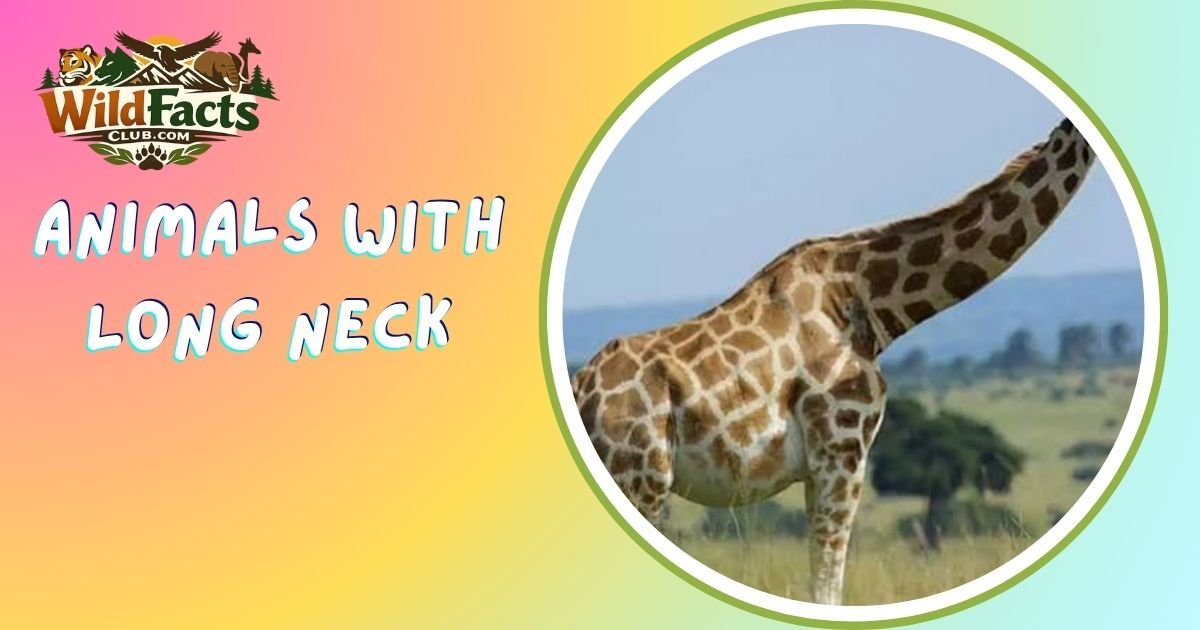
The giraffe is the most famous example of an animal with a long neck. Native to Africa, it uses its impressive neck to reach leaves high in acacia trees, where many other herbivores cannot feed. Adult giraffes can have necks around six feet long, although their necks contain only seven cervical vertebrae, the same number found in humans. Their height also helps them spot predators across open grasslands and savannas.
Ostrich
The ostrich is the world’s largest living bird and has a long, slender neck that helps it observe its surroundings. Native to Africa, this flightless bird lives in grasslands, savannas, and semi-desert environments. Its long neck allows it to spot potential predators from a distance and reach food on the ground. Ostriches mainly eat plants, seeds, and fruits, although they may also consume insects. Their powerful legs help them run quickly when threatened.
Swan
Swans are large waterbirds recognized for their elegant appearance, long curved necks, and graceful swimming movements. They live in lakes, rivers, ponds, and wetlands across several regions of the world. Their long necks help them reach aquatic plants growing beneath the water’s surface without diving completely underwater. Swans primarily eat aquatic vegetation, grasses, and other plant material. Their necks also play a role in courtship displays and communication between individuals.
Flamingo
Flamingos are distinctive birds known for their pink feathers, long legs, and long, flexible necks. They inhabit shallow lakes, lagoons, salt flats, and coastal wetlands. Their necks allow them to position their specialized bills in the water while filtering tiny organisms, algae, and other food particles. Flamingos often stand on one leg while feeding or resting. Their pink coloration comes mainly from pigments called carotenoids found in the organisms and food they consume.
Camel
Camels are large mammals adapted to survive in dry desert environments. They have long necks that help them browse shrubs, leaves, and other vegetation that may grow above ground level. Camels are especially well suited to harsh conditions because they can conserve water and tolerate considerable changes in body temperature. There are two main living camel species: the dromedary, which has one hump, and the Bactrian camel, which has two humps. Both have long necks and strong bodies.
Llama
Llamas are domesticated South American mammals related to camels. They have long necks that help them reach grasses, shrubs, and other vegetation in mountainous and high-altitude environments. Llamas are commonly raised in the Andes for carrying loads, producing fiber, and providing companionship. Their necks also contribute to their distinctive upright appearance. These social animals usually live in groups and communicate through body language, ear movements, and vocalizations. They are well adapted to cool, dry mountain habitats.
Alpaca
Alpacas are domesticated South American camelids known for their soft fleece and slender bodies. They have relatively long necks that allow them to graze on grasses and other low-growing vegetation. Alpacas are mainly raised for their valuable wool, which is used to make clothing, blankets, and other textiles. They live in herds, particularly in the Andean regions of Peru, Bolivia, and surrounding areas. Their gentle nature and adaptation to high elevations make them important animals for local communities.
Guanaco
The guanaco is a wild South American camelid closely related to llamas and alpacas. It has a long neck that helps it browse vegetation and scan its surroundings for predators. Guanacos inhabit grasslands, shrublands, and mountainous areas, especially in Argentina, Chile, and other parts of South America. Their diet mainly consists of grasses, leaves, and shrubs. These animals are known for their ability to survive in different climates, including cold, windy regions where vegetation can be limited.
Emu
The emu is a large flightless bird native to Australia. It has a long neck, strong legs, and a body covered with soft, shaggy feathers. Its neck helps it reach plants, fruits, seeds, and insects while feeding. Emus usually live in forests, grasslands, and open woodlands. They can travel long distances in search of food and water. Although they cannot fly, their powerful legs allow them to run quickly across open terrain to escape danger.
Great Egret
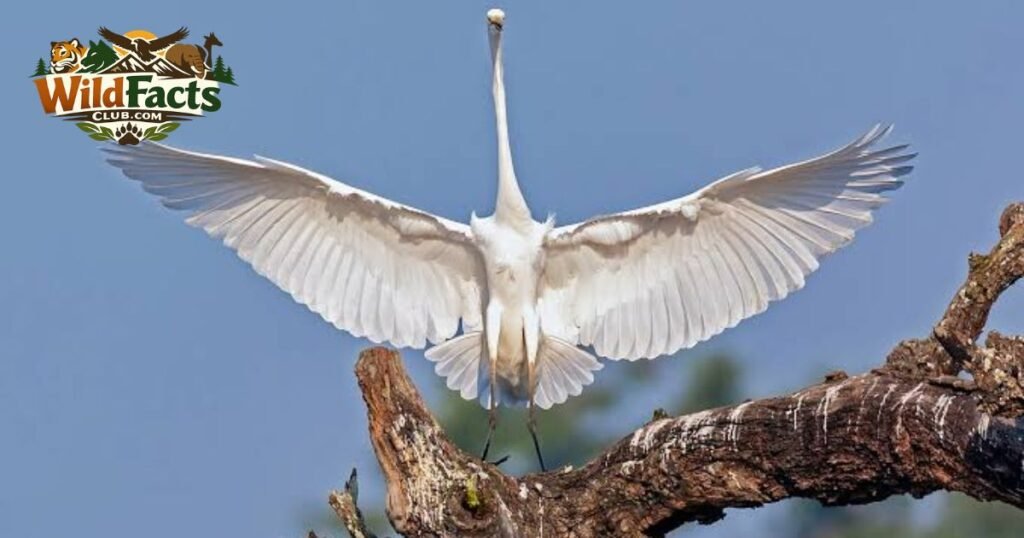
The great egret is a tall white wading bird recognized by its long neck, long legs, and pointed yellow bill. It inhabits wetlands, marshes, rivers, and shallow lakes across many parts of the world. Its flexible neck helps it strike quickly at fish, frogs, and other small aquatic animals. Great egrets often stand still in shallow water while waiting for prey. Their long legs and necks make them effective hunters in habitats where food is found near the water’s surface.
Heron
Herons are long-legged wading birds with elongated necks that help them catch prey in aquatic environments. They are found near rivers, lakes, marshes, ponds, and coastal wetlands. Herons feed on fish, frogs, insects, crustaceans, and other small animals. Their necks can bend into an S-shaped curve when resting and extend rapidly when striking prey. This specialized movement helps them hunt with precision. Different heron species vary in size, coloration, and habitat preferences.
Crane
Cranes are tall birds with long necks and long legs, often seen walking through wetlands, grasslands, and agricultural fields. Their necks help them reach food on the ground and communicate through elaborate movements and displays. Depending on the species, cranes eat seeds, roots, grains, insects, and small animals. Many crane species are known for their impressive courtship dances, which involve jumping, bowing, and spreading their wings. Some species migrate thousands of kilometers between breeding and wintering grounds.
Stork
Storks are large wading birds with long necks, long legs, and strong bills. They inhabit wetlands, grasslands, open fields, and areas near rivers or lakes. Their necks help them search for food and capture prey, including fish, frogs, insects, and small reptiles. Some stork species also feed on small mammals. These birds are generally strong fliers and often travel long distances during migration. Their large nests are frequently built in trees, on cliffs, or on tall structures.
Pelican
Pelicans are large waterbirds with long necks and distinctive bills equipped with expandable throat pouches. They live near lakes, rivers, estuaries, and coastal waters. Their long necks help them position their bills for catching fish, which form a major part of their diet. Some species cooperate while fishing, driving fish toward shallow water before scooping them up. Pelicans are excellent swimmers and can often be seen resting in groups along shorelines or floating on the water.
Anhinga
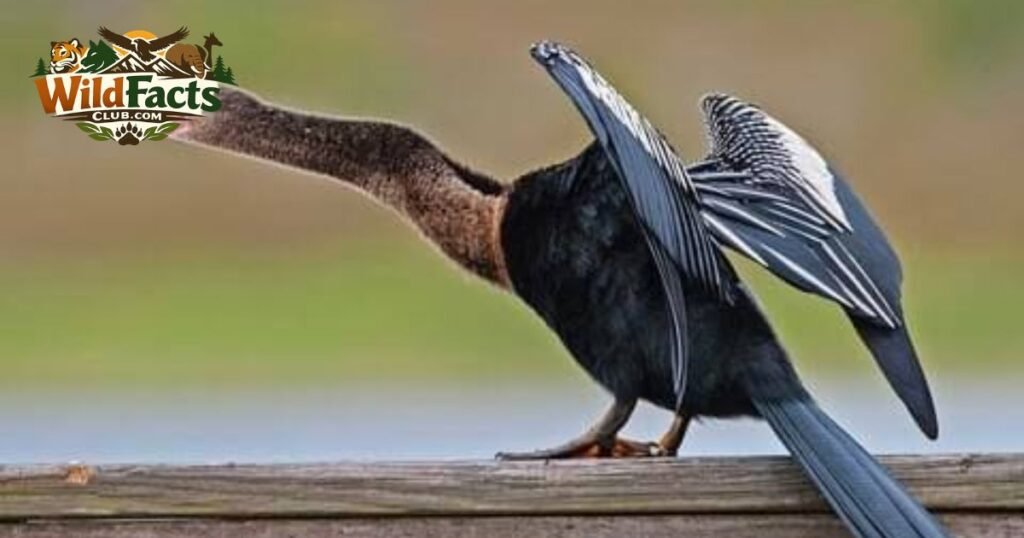
The anhinga, sometimes called the snakebird, is a waterbird with a very long, slender neck. When swimming, it often keeps most of its body underwater, making its neck and head appear like a snake rising above the surface. It lives in freshwater lakes, marshes, and slow-moving rivers, especially in warm regions. Anhingas primarily eat fish, which they catch by spearing them with their sharp bills. Their narrow bodies and flexible necks help them move efficiently through aquatic habitats.
Secretary Bird
The secretary bird is a large African bird of prey known for its long legs, elongated neck, and distinctive crest of feathers. It usually inhabits open grasslands and savannas, where it walks across the ground in search of food. Unlike many birds of prey, it often hunts on foot, feeding on insects, lizards, snakes, and small mammals. Its long neck allows it to look around while walking and helps position its head when striking prey.
Read More: Pointy Animals: 25 Fascinating Animals With Pointed Features
Okapi
The okapi is a forest-dwelling mammal native to the Democratic Republic of the Congo in Central Africa. It is related to the giraffe but has a much shorter neck and a more compact body. Its neck helps it reach leaves, buds, and other vegetation in dense rainforest habitats. The okapi has dark brown fur and distinctive white stripes on its hindquarters and legs. Its long tongue helps it pull leaves from branches and clean its eyes and ears.
Long-Necked Turtle
Long-necked turtles are freshwater reptiles whose necks can be surprisingly long compared with their shells. Several species occur in Australia, South America, and other regions, depending on the group. Their elongated necks help them extend their heads toward prey while keeping much of their bodies protected by their shells. Many species eat insects, worms, small fish, crustaceans, and other aquatic animals. Their necks also help them reach the water’s surface to breathe while remaining partly submerged.
Snake-Necked Turtle
Snake-necked turtles are named for their unusually long necks, which may be folded sideways beneath the shell rather than pulled straight back. They are found mainly in Australia, New Guinea, and nearby regions, depending on the species. Their long necks help them catch small fish, tadpoles, insects, and other aquatic prey. These turtles usually inhabit freshwater rivers, ponds, and wetlands. Their distinctive neck structure is an example of how different animals develop specialized adaptations for feeding and survival.
Eastern Long-Necked Turtle
The eastern long-necked turtle is a freshwater turtle native to eastern Australia. It has a long neck that can extend outward to help capture prey and reach the water’s surface. It commonly inhabits ponds, lakes, slow-moving rivers, and wetlands. Its diet includes aquatic insects, small fish, tadpoles, and other small animals. When threatened, it can release a strong-smelling substance as a defense. Its long neck and specialized feeding behavior make it one of Australia’s most recognizable freshwater turtles.
Sea Turtle
Sea turtles are marine reptiles with relatively long necks that help them reach food and maneuver their heads while swimming. Their neck lengths vary among species, and they generally cannot retract their heads completely into their shells like many freshwater turtles. Depending on the species, sea turtles eat seagrass, algae, jellyfish, sponges, or other marine organisms. They spend most of their lives in oceans but come ashore to lay eggs. Their streamlined bodies and flippers help them travel efficiently through the water.
Black Swan
The black swan is a large waterbird native to Australia and introduced to some other regions. It has dark plumage, a red bill, and a long, curved neck that helps it feed on submerged aquatic plants. Black swans are commonly found in lakes, rivers, estuaries, and wetlands. They often form pairs and may gather in large flocks when food is plentiful. Their elegant appearance and long necks make them popular birds in parks, gardens, and other waterside environments.
Whooper Swan
The whooper swan is a large northern swan species recognized by its long neck, white plumage, and yellow-and-black bill. It breeds in northern Europe and Asia and migrates to milder regions during winter. Its long neck helps it reach aquatic vegetation growing beneath the water’s surface. Whooper swans may also feed on grasses and agricultural crops. They are powerful fliers and often travel in family groups. Their loud calls help members of a flock communicate while flying or resting.
Why Do Animals Have Long Necks?
Long necks provide several advantages, depending on the animal’s environment and lifestyle. Giraffes use their necks to reach high branches, while swans and flamingos use theirs to access food in water. Wading birds such as herons use their necks to strike at prey quickly. In some species, long necks also help animals observe their surroundings, compete for mates, or communicate with other members of their group.
How Do Long Necks Help Animals Survive?
A long neck can improve an animal’s access to food and help it detect possible dangers. Animals that feed on vegetation may reach plants unavailable to shorter animals, while predators can use an extended neck to capture prey efficiently. Aquatic animals may use their necks to search for food without moving their entire bodies. However, long necks also require adaptations in muscles, bones, circulation, and movement to support their weight and allow them to function effectively.
Which Animal Has the Longest Neck?
The giraffe is widely recognized as the living animal with the longest neck. An adult giraffe’s neck can measure approximately 1.8 to 2.4 meters, although measurements vary by individual. Despite its extraordinary length, a giraffe has only seven cervical vertebrae, the same number found in most mammals. Each vertebra is greatly elongated. This unique adaptation allows giraffes to browse high tree branches and gives them a distinctive height advantage in African savannas.
Final Words
Animals with long necks display an incredible variety of adaptations that help them survive in different environments. From the towering giraffe to graceful swans, elegant flamingos, hunting herons, and long-necked turtles, each species uses its neck in a way suited to its lifestyle.
Learning about these animals helps us understand the diversity of nature and the importance of protecting their habitats. Whether they live on land or in water, long-necked animals demonstrate the remarkable ways wildlife adapts to its surroundings.
FAQs
Which Animal Has The Longest Neck?
The giraffe has the longest neck of any living land animal. Its long neck helps it reach leaves high in trees and spot potential predators across open grasslands.
Why Do Animals Have Long Necks?
Animals have long necks for different reasons, including reaching food, finding mates, defending themselves, and seeing their surroundings. The exact purpose depends on the species and its habitat.
What Animals Have Long Necks Besides Giraffes?
Animals with long necks besides giraffes include ostriches, llamas, alpacas, swans, flamingos, camels, and gerenuks. Some prehistoric animals, such as sauropod dinosaurs, also had extremely long necks.